
Flour dust, sugar syrup, hot trays straight out of the oven, and a hose-down at the end of every shift. A bakery floor takes more punishment than almost any other commercial space, and a standard tiled or bare concrete floor simply cannot keep up. Grout lines trap grease and bacteria. Tiles crack under trolley traffic. And the moment that floor gets wet, it becomes a genuine slip hazard for staff.
That is why more Geelong bakeries and commercial kitchens are switching to anti-slip epoxy flooring. Here is what it actually involves and why it matters for food safety, not just appearance.
Why a Bakery Needs a Different Floor to a Showroom or Garage
Most epoxy flooring content talks about garages and showrooms, glossy, decorative finishes. A bakery floor has a completely different job. It needs to handle constant moisture, sugar and oil spills, heat near ovens and proving rooms, and daily chemical washdowns, all while staying slip resistant for staff moving quickly with hot trays and loaded trolleys. A decorative gloss finish that looks great in a garage can actually become dangerously slippery in a working kitchen.
What Anti-Slip Epoxy Flooring Actually Involves
Anti-slip epoxy for a commercial kitchen or bakery is not just a coloured coating. An aggregate or quartz broadcast is worked into the epoxy system before the final seal coat, creating a textured surface that holds grip even when wet with water, oil, or sugar syrup. The floor stays seamless, with no grout lines or joints, so there is nowhere for crumbs, grease, or bacteria to collect.
Slip Rating and Food Safety Compliance
Commercial kitchen and food preparation floors fall under specific slip resistance requirements. Under AS 4586, wet commercial kitchen areas typically need a higher slip rating (P4/P5 or R11/R12) than a standard retail or office floor. On top of that, food premises requirements call for an impervious, easy-clean, light-coloured floor that will not harbour bacteria. A properly installed anti-slip epoxy system ticks both boxes in one job, rather than treating slip resistance and hygiene as separate problems.
Why It Works So Well in a Bakery
- Grip when wet. The broadcast aggregate keeps its slip resistance even with water, flour, or oil on the surface.
- Heat and thermal resistance. Handles the heat cycling near ovens and proving areas without cracking or lifting.
- Sugar and oil stain resistance. Spilled syrup, batter, and cooking oil wipe up instead of soaking in and staining.
- Seamless and hygienic. No grout lines or joints for crumbs, grease, or bacteria to hide in, which makes daily cleaning genuinely fast.
- Handles heavy daily use. Trolleys, racking, and constant foot traffic wear down bare concrete fast. A commercial-grade epoxy system is built for it.
What This Looks Like on a Real Job
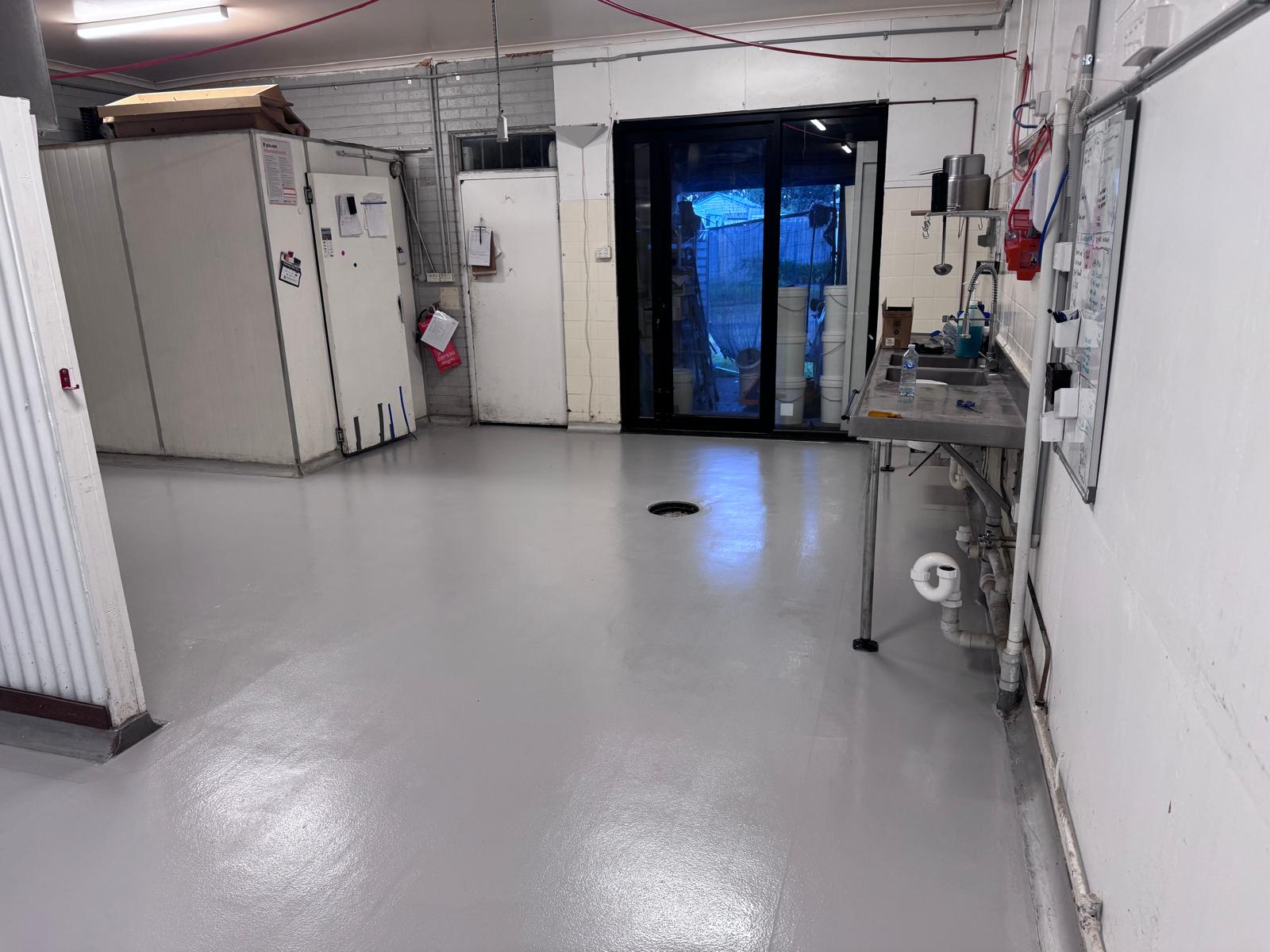
The floor above is a recent bakery job, a seamless, light grey anti-slip epoxy system installed through the full production area, right up to the coolroom doors and prep sink. No grout lines, no bare patches, and a surface built to handle daily washdowns without breaking down.
Cost and What Affects It
Pricing for a bakery or commercial kitchen floor depends on the size of the space, the current condition of the concrete, and the slip rating required for your specific areas (wet prep zones typically need a higher grip rating than dry storage). Rather than throw out a number that will not apply to your kitchen, Joe will assess the space and give you one clear fixed-price quote. For a broader look at commercial pricing and what drives it, see our guide to commercial and warehouse epoxy flooring costs in Geelong.
Minimising Downtime
A bakery cannot afford to shut down mid-week. Where needed, we schedule kitchen and bakery floor installs overnight or across a closure day so the space is ready to go before the next shift starts.
Servicing Bakeries and Commercial Kitchens Across Greater Geelong
We work with food businesses throughout Geelong CBD, Newtown, Geelong West, North Geelong, Belmont, Highton, Waurn Ponds, Grovedale, Armstrong Creek, Charlemont, Marshall, Lara, Corio, Norlane, Torquay, Ocean Grove, Drysdale, Leopold and surrounding areas.
FAQs
What slip rating do I need for a commercial kitchen floor?
Wet prep and cooking areas generally need a higher rating (P4/P5 or R11/R12 under AS 4586) than dry storage zones. We assess this area by area when we quote your job.
How long does the floor take to install?
Most bakery and commercial kitchen floors are completed within a few days, depending on size and prep required. We will confirm exact timing at the quote stage.
Can you work around our production schedule?
Yes. Overnight and closure-day scheduling is available so the kitchen is not out of action during trading hours.
Will the floor handle constant hose-down cleaning?
Yes, that is exactly what a commercial-grade epoxy system is built for. The seamless surface is designed for daily washdowns without breaking down.
Does the floor meet food safety requirements?
A properly installed anti-slip epoxy system gives you an impervious, easy-clean, seamless surface, which is what food premises requirements call for. We can talk through your specific compliance needs at the quote stage.