
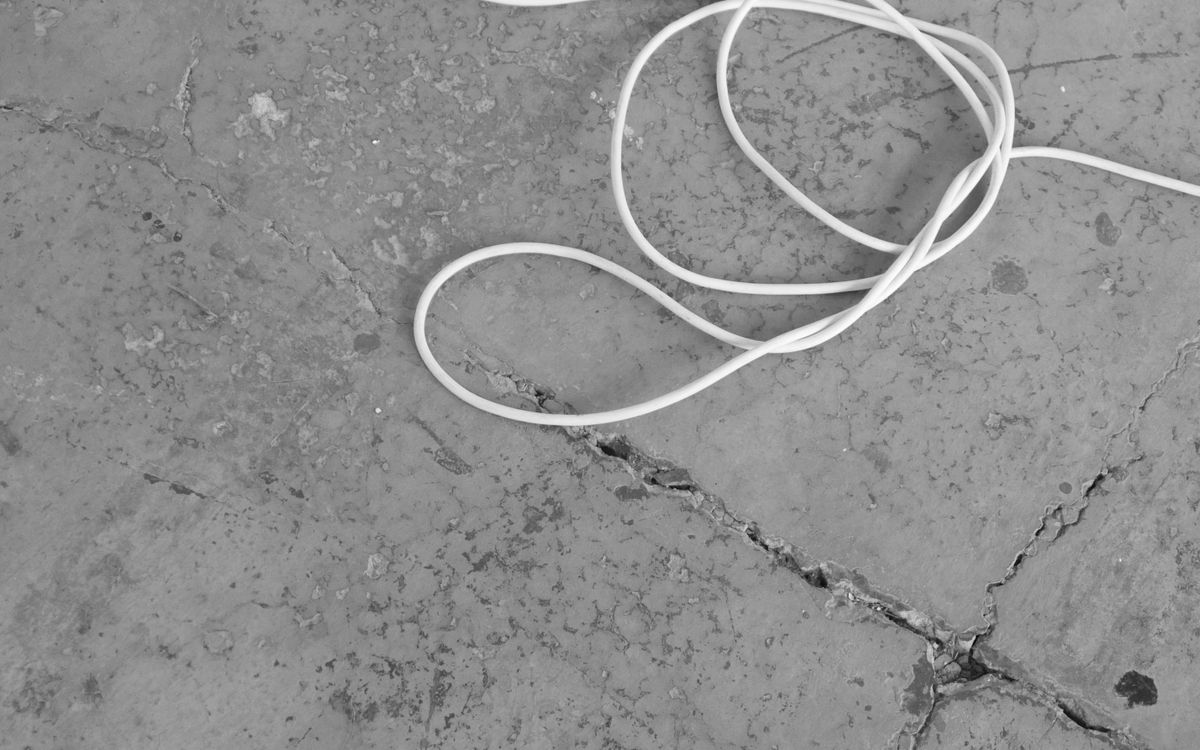
Quick answer: Sometimes, but not the way most people hope. Epoxy can only bond as well as the surface under it. Over sound, well-bonded old epoxy it can work after proper sanding or grinding. Over old paint, loose coatings or shiny sealers, it usually fails. Over tiles, it is possible in some cases, but the grout lines and the tile bond need to be right. In most garages and commercial floors, the safest answer is to grind the old layer off and start clean.
A homeowner in Highton told us his garage floor had “a bit of paint on it”. He wanted to roll epoxy straight over the top and save a few hundred dollars.
We did a quick scratch test. The paint lifted off in a sheet.
That is the problem in one line. If the old layer is not locked to the concrete, the new coating just rides on top of it. Then it peels together.
The rule that decides everything
Epoxy does not bond to what you can see. It bonds to whatever is underneath it. So the question is never “can epoxy go over this?” The question is “is this old layer firmly stuck to the slab, and is it clean and rough enough to grip?”
If the answer is no, it has to come off.
Epoxy over old paint
This is the most common request, and the most common failure.
Garage floor paint is thin, and often glossy. Many are also water-based or acrylic, which do not play well with epoxy. Add years of tyre marks, oil and dust, and the surface is slick and weak.
Usually possible? Rarely. If the paint is thin, tightly bonded and fully sanded or ground to a matte finish, some systems can work. But it is a gamble, and most installers will grind it off rather than risk a callback.
Quick test: scratch a small spot with a key. If it flakes or lifts, it needs to go.
Epoxy over old epoxy
This one can work, but only if the old coating is in good shape.
- Sound and well bonded: it can be ground or sanded to create a fresh profile, then recoated.
- Peeling, bubbling or hollow-sounding: it has to be removed. We explain the causes in our guide to why epoxy floors fail.
- Yellowed or chalky: that is a UV issue on the surface. It can often be fixed with a proper prep and a UV-stable topcoat.
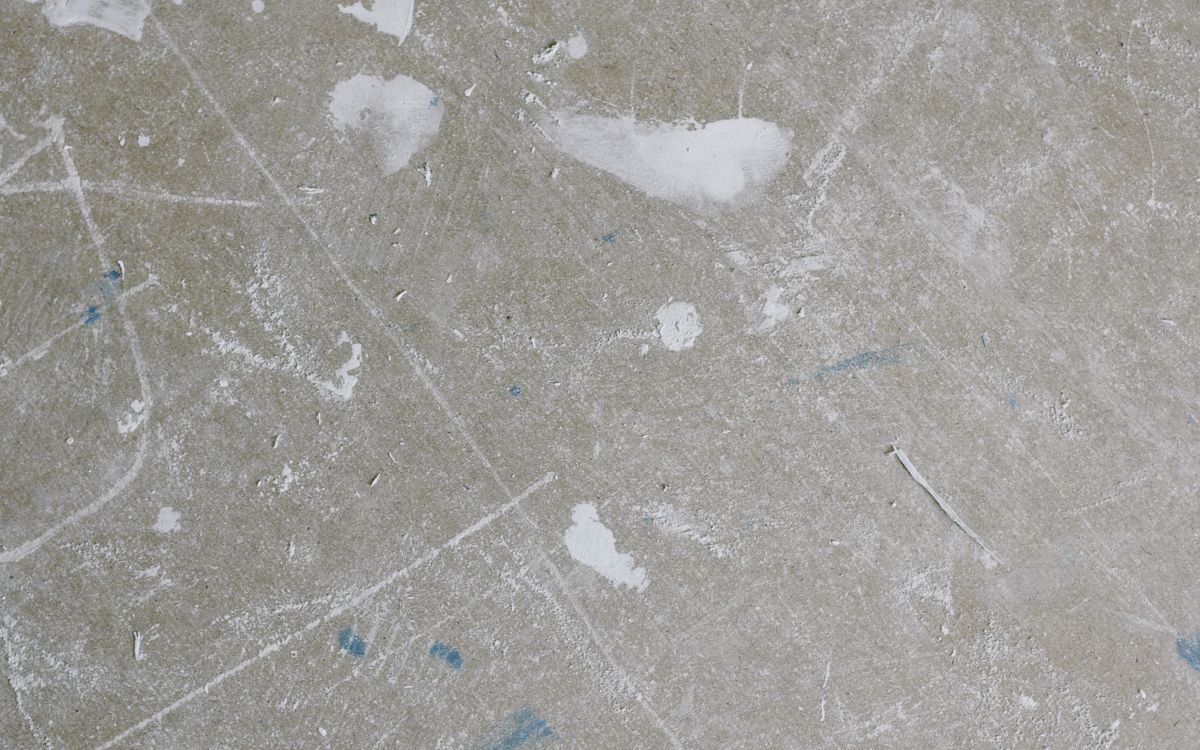
Epoxy over tiles
People ask this a lot for laundries, patios and old commercial kitchens. It can work, but it needs care.
The tiles must be solid. Tap across them. Any that sound hollow or rock are a sign the tile bond is failing, and epoxy will not fix that.
Then there is the grout. Grout lines are low spots. They need to be filled and levelled, or the pattern will show through the coating, and the lines can become weak points.
The catch: glazed tiles are very smooth. They need to be mechanically roughened first. Skip that step and the coating will not grip.
In many cases, removing the tiles and coating the slab is cleaner and lasts longer. It costs more upfront, but there is less to go wrong.
Epoxy over sealers and other coatings
Many slabs have a sealer or a curing compound on them and nobody remembers. A quick check is to drop a little water on the concrete. If it beads up, there is a sealer. Epoxy will not bond properly to it, so the sealer has to be ground off first.
The same applies to old polyurethane, acrylic and any high-gloss product. They all need to be removed or thoroughly abraded.
What about concrete that has oil on it?
Oil soaks into concrete. Degreasing the surface is not always enough, because the stain sits below the top layer. Grinding takes off the contaminated top layer, and in bad cases the slab may need extra treatment before coating.
A quick guide: what you have vs what to do
| What is on the floor | Can epoxy go over it? |
|---|---|
| Thin garage floor paint | Usually no. Grind it off. |
| Sound old epoxy | Possibly, after grinding or sanding |
| Peeling or bubbling epoxy | No. Remove it. |
| Solid tiles, glazed | Sometimes, with heavy prep and grout filling |
| Loose or hollow tiles | No. Fix or remove them. |
| Sealer or curing compound | No. Grind it off. |
| Bare, clean concrete | Yes, after grinding |
Why grinding is almost always the answer
Diamond grinding removes the old layer and the weak top skin of the concrete in one go. It leaves a clean, rough surface that epoxy can grip. That is why we grind every floor. Read more in why grinding comes first, and see what concrete grinding costs in Geelong if you are budgeting.
Skipping it saves money on day one. It usually costs more by year two.
Frequently asked questions
Can I epoxy over old garage floor paint?
Rarely. Paint is thin and often loosely bonded. It normally needs to be ground off so the epoxy can grip the concrete.
Can you put epoxy over existing epoxy?
Yes, if the old coating is sound and firmly bonded. It still needs to be ground or sanded first. If it is peeling, it has to come off.
Can epoxy go over tiles?
It can in some cases. The tiles must be solid, the glaze must be roughened and the grout lines need filling. Often it is cleaner to remove the tiles.
How do I know if my floor has a sealer on it?
Sprinkle a little water on the concrete. If it beads and sits on top, there is probably a sealer. That needs removing before epoxy.
Will a hardware store primer fix a bad surface?
No. A primer helps a good surface. It cannot rescue a loose or contaminated one.
Can you tell me what my floor needs from photos?
Often, yes. Send us a few clear photos and we can usually tell you whether it needs a light grind, a full strip or something else.
Not sure what is on your floor?
Send us a few photos of the surface. We will tell you honestly what it needs before you spend anything on materials.
Call Joe on 0433 249 998 or request a quote below.
Your quote request has been received.
Our team will get back to you shortly.