
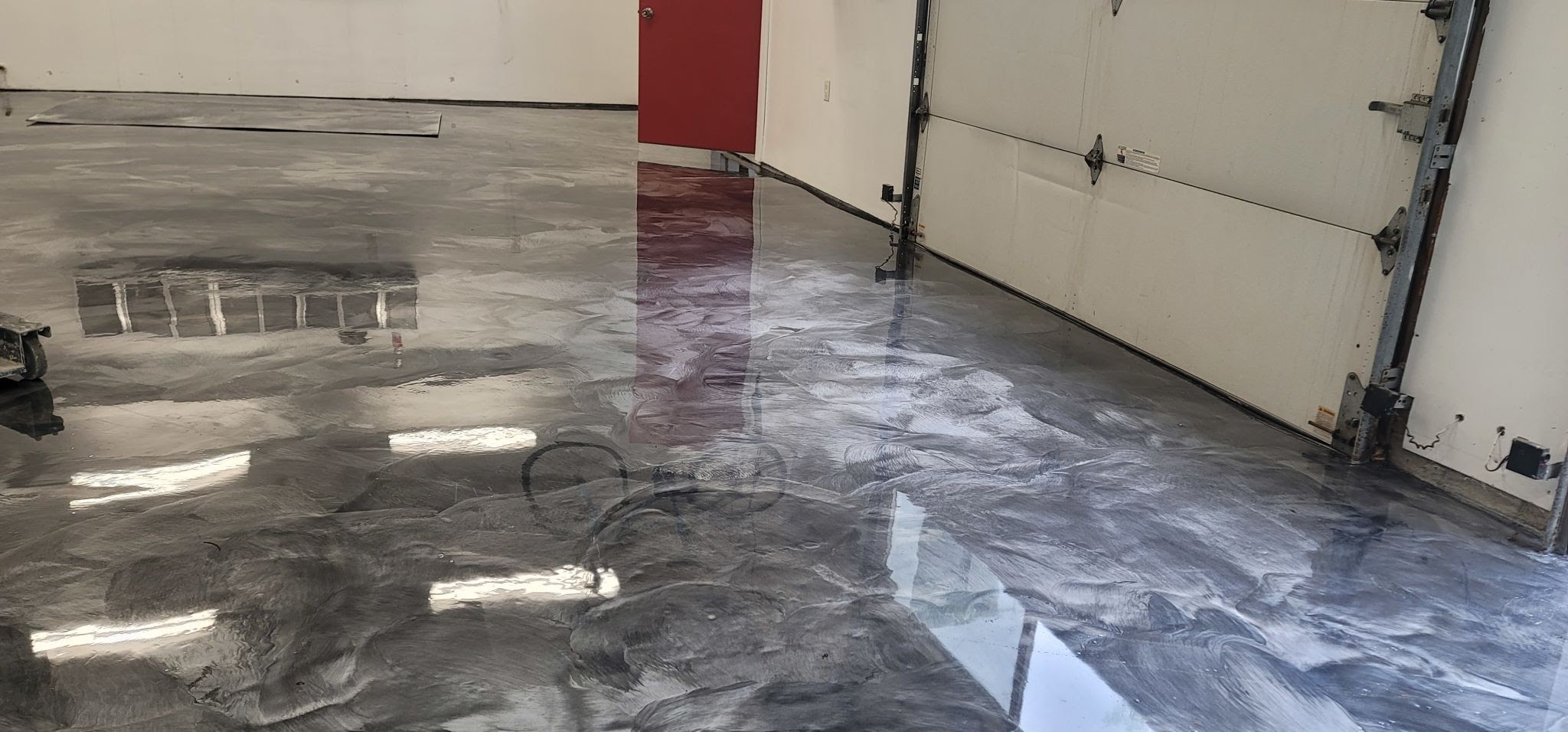
Quick answer: Yes, you can epoxy a floor in a Geelong winter, but the weather matters more than most people think. Most epoxy systems need the slab and the air to sit above roughly 10 degrees to cure properly, and cold, damp concrete can cause cloudy patches, slow curing and poor bond. A good installer plans around it. A rushed one does not.
It is a grey July morning in Newcomb.
The garage is freezing. The slab feels like a block of ice. And someone has just booked a coating job because “the car is away at the mechanic anyway”.
Can it go ahead? Sometimes. Here is how to tell the difference between a smart winter job and a floor that fails by spring.
Why cold weather is a problem for epoxy
Epoxy cures through a chemical reaction. That reaction needs warmth. When the temperature drops, the reaction slows down, and a few things can go wrong.
- Slow, soft curing. The floor stays tacky for longer and takes longer to harden. That means more days without your garage and a higher chance of marks, dust and footprints setting into the surface.
- Weak bond. Cold, damp concrete does not grip the coating as well. This is a common hidden cause of peeling later. If you have seen it happen, read why epoxy floors peel and bubble.
- Cloudy or greasy film. In cool, humid conditions, some epoxies form a waxy film on the surface as they cure. It looks like a hazy patch and has to be cleaned off before any topcoat goes on.
- Condensation. When the slab is colder than the air, moisture forms on it. Coating over that moisture traps it, and trapped moisture means bubbles.
What temperature do you actually need?
Every product has its own data sheet, and a professional follows it. As a general rule, most epoxy systems want both the slab and the air to be above about 10 degrees, and a few degrees above the dew point, for the whole application and early cure.
Geelong winters regularly sit in the low teens during the day and drop well below that overnight. That overnight dip is the real risk, because the floor is still curing while it happens.
The Geelong factor: damp slabs
Winter here is not just cold. It is wet. Slabs that have been sitting through weeks of rain can hold more moisture than a summer slab, and that is a bigger threat than the cold itself.
Moisture moves up through concrete, and a sealed coating can trap it. This is also why timing matters on brand new concrete. Read how long to wait before coating a new slab for the details.
How a good installer handles winter jobs
- Checks the slab, not just the weather forecast. Slab temperature and moisture matter more than the air.
- Waits for a good window. Cold snaps and rain forecasts are reasons to move a job by a few days, not push through.
- Grinds thoroughly. Proper diamond grinding opens the slab so the coating has something to grip, even in cooler conditions.
- Chooses a suitable system. Some products are made to cure in cooler weather. Ask what is being used and what temperature range it is rated for. If speed in the cold matters, our guide on polyaspartic vs epoxy explains the options.
- Keeps the space warm during cure. A closed garage, a stable temperature and no wet vehicles driving in too early.
What you can do to help
- Keep the garage door closed in the days before and after the job.
- Clear the space completely, including anything that drips or leaks moisture.
- Do not park a wet or freshly washed car on the floor until you get the all clear.
- Be flexible on dates. A two day delay for better weather can save you a floor.
Is it better to wait for spring?
Not always. A well planned winter job on a dry, properly prepared slab will perform just as well as a summer one. And winter is often a quieter season for installers, which can mean easier booking.
But if the slab is damp, the forecast is wet for a week, or the garage cannot be kept above the minimum temperature, waiting is the smart call. A floor that goes down at the right time lasts 10 to 20 years. A floor that goes down at the wrong time can fail in months. See the lifespan guide for what affects longevity.
Frequently asked questions
What is the minimum temperature to apply epoxy?
It varies by product, but most systems need the slab and air above around 10 degrees. Always check the manufacturer data sheet, and ask your installer which product they are using.
Why does my new epoxy floor look cloudy?
Cool, humid conditions can cause a hazy film on the surface as the epoxy cures. It usually needs to be cleaned before any further coats. It is a good reason to avoid coating in damp weather.
Can epoxy cure in an unheated garage?
Sometimes, but only if the temperature stays within the product range for the whole cure. In a cold Geelong winter, that often means waiting for a mild spell.
How long does epoxy take to cure in winter?
Longer than in summer. Foot traffic and vehicle traffic can both be delayed by days. We will give you a realistic timeline for your job. For the usual process see the installation timeline.
Does winter coating cost more?
Not usually, but delays can affect scheduling. The prep and system you need set the price. See the epoxy flooring cost guide for a breakdown.
Planning a floor this season?
Tell us about the space and when you would like it done. We will check the slab, talk through the timing and give you a straight answer on whether to go ahead or wait. No pressure.
Call Joe on 0433 249 998 or request a quote below.
Your quote request has been received.
Our team will get back to you shortly.