
Picture a Saturday in Highton. Someone rolls a hardware store epoxy kit across the garage floor. It looks brilliant for a fortnight. By winter, it’s peeling in strips right where the car turns in.
Nothing was wrong with the idea. The coating just wasn’t built, or prepared, for the job. That’s the whole story of epoxy: it’s a great product that gets blamed for what happens underneath it.
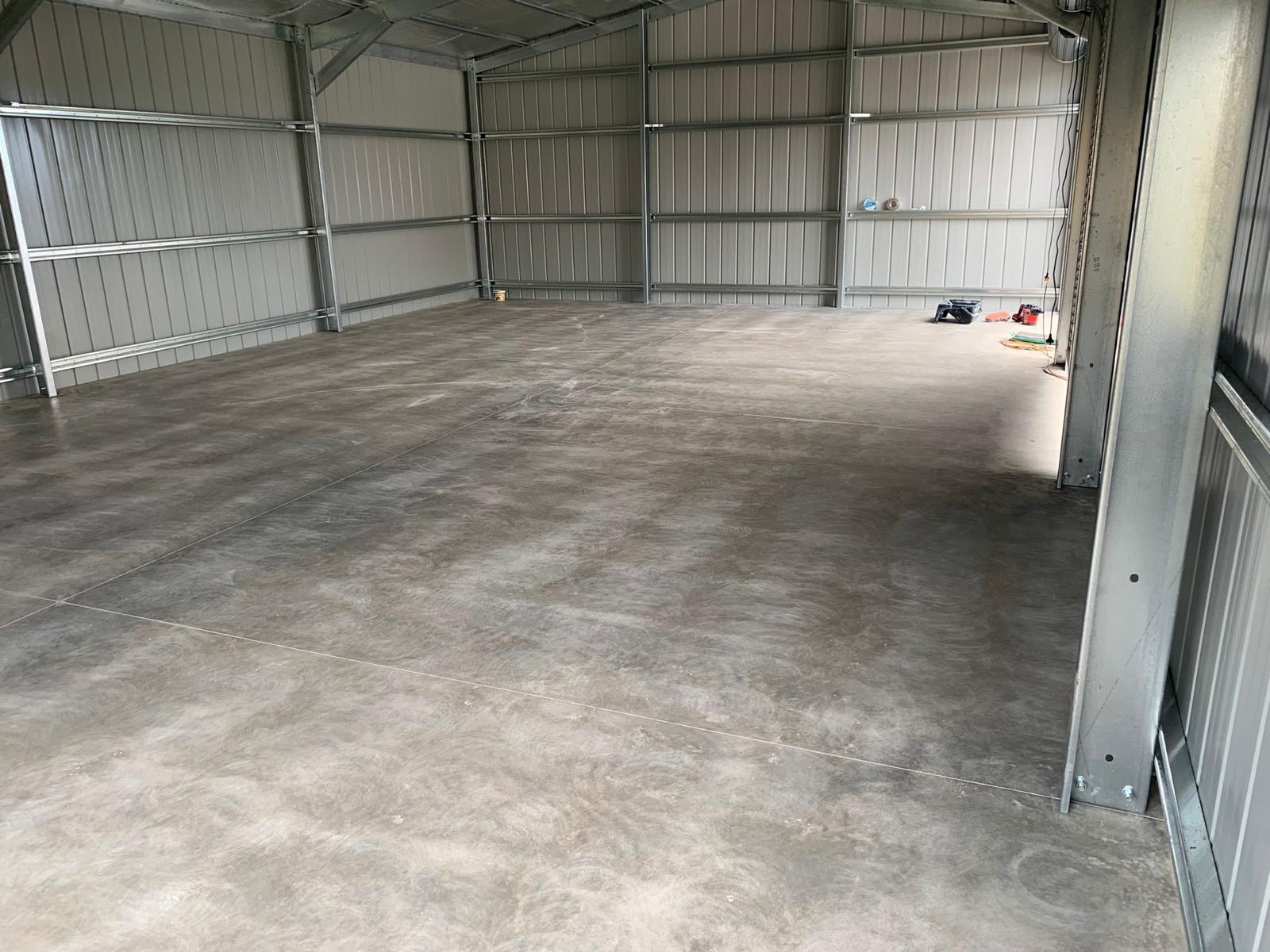
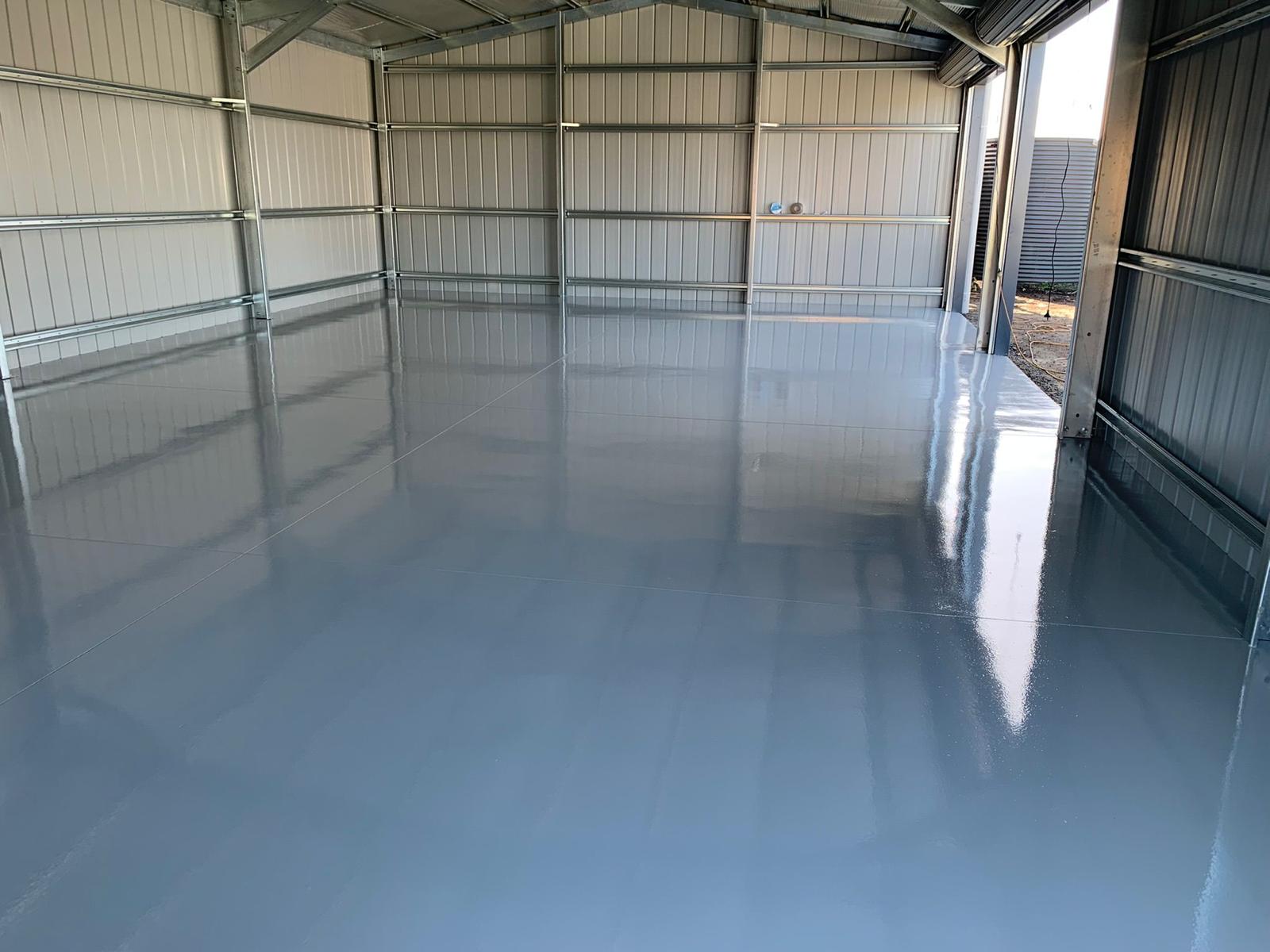
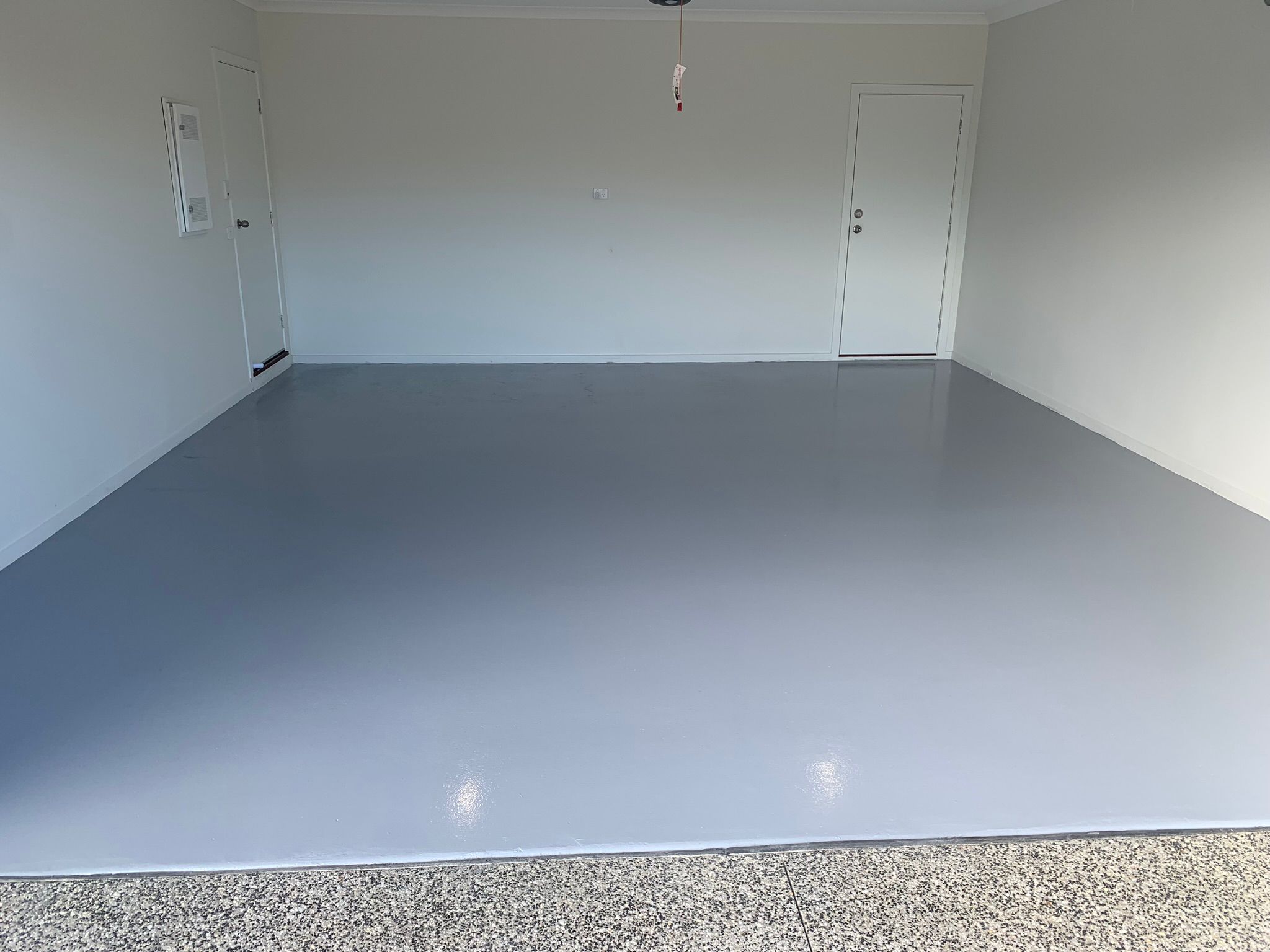
A Geelong garage floor, before and after epoxy coating.
This guide explains what an epoxy coating actually is, the types you’ll be quoted on, how long it lasts, and what to check before you say yes to anyone. Geelong conditions included.
Quick Answer
An epoxy coating is a two-part resin that bonds to concrete and cures into a hard, seamless, easy-to-clean surface. Done properly, with the slab ground, repaired and finished with a UV-stable topcoat, it can last 10 years or more. The prep decides the result far more than the brand of resin.
What Is an Epoxy Coating?
Epoxy is a resin and a hardener, mixed just before application. Once they’re combined, a chemical reaction starts and the mix cures into a tough, plastic-like layer that grips the concrete below it.
That’s why it behaves so differently to paint. Paint dries. Epoxy cures. The result is a floor that resists oil, fuel, most household chemicals and daily wear, with no joins for dirt to hide in.
Epoxy Coating vs Paint, Sealer and DIY Kits
These get lumped together, but they’re very different products.
| Option | How it performs | Best for |
| Garage floor paint | Thin film. Scuffs and lifts under tyres. | Light use, short-term fix |
| Clear concrete sealer | Helps with dust and staining. Little impact resistance. | Keeping a bare concrete look |
| DIY epoxy kit | Often water-based with lower solids. Thin, and heavily dependent on prep. | Low traffic, tight budgets |
| Professional epoxy system | Layered, thicker build. Bonds to a ground surface and is sealed with a UV-stable topcoat. | Garages, driveways, workshops, commercial floors |
If you’re weighing up the DIY route, read what actually goes wrong with DIY epoxy kits first. It’s cheaper to learn from someone else’s peeling floor.
The Main Types of Epoxy Coating
When you get quotes, you’ll hear a handful of terms. Here’s what they mean in plain English.
| System | What it is | Build | Suits |
| Solid colour | Single-colour base and topcoat | Light to medium | Garages, storage, workshops |
| Flake | Coloured flakes scattered into the base coat, then sealed | Medium | Home garages, alfresco areas, showrooms |
| Metallic | Pigments swirled through clear resin for a marbled look | Medium | Feature floors, showrooms, entertaining spaces |
| Anti-slip finish | Grip aggregate added to the topcoat | Medium | Kitchens, ramps, wet-prone areas |
| Heavy-duty or mortar | Thick, hard-wearing build for punishing floors | Heavy | Warehouses, factories, forklift traffic |
Want the full picture on two of these? See our guides to flake vs plain epoxy vs polished concrete and metallic epoxy. For business floors, start with commercial and warehouse epoxy.
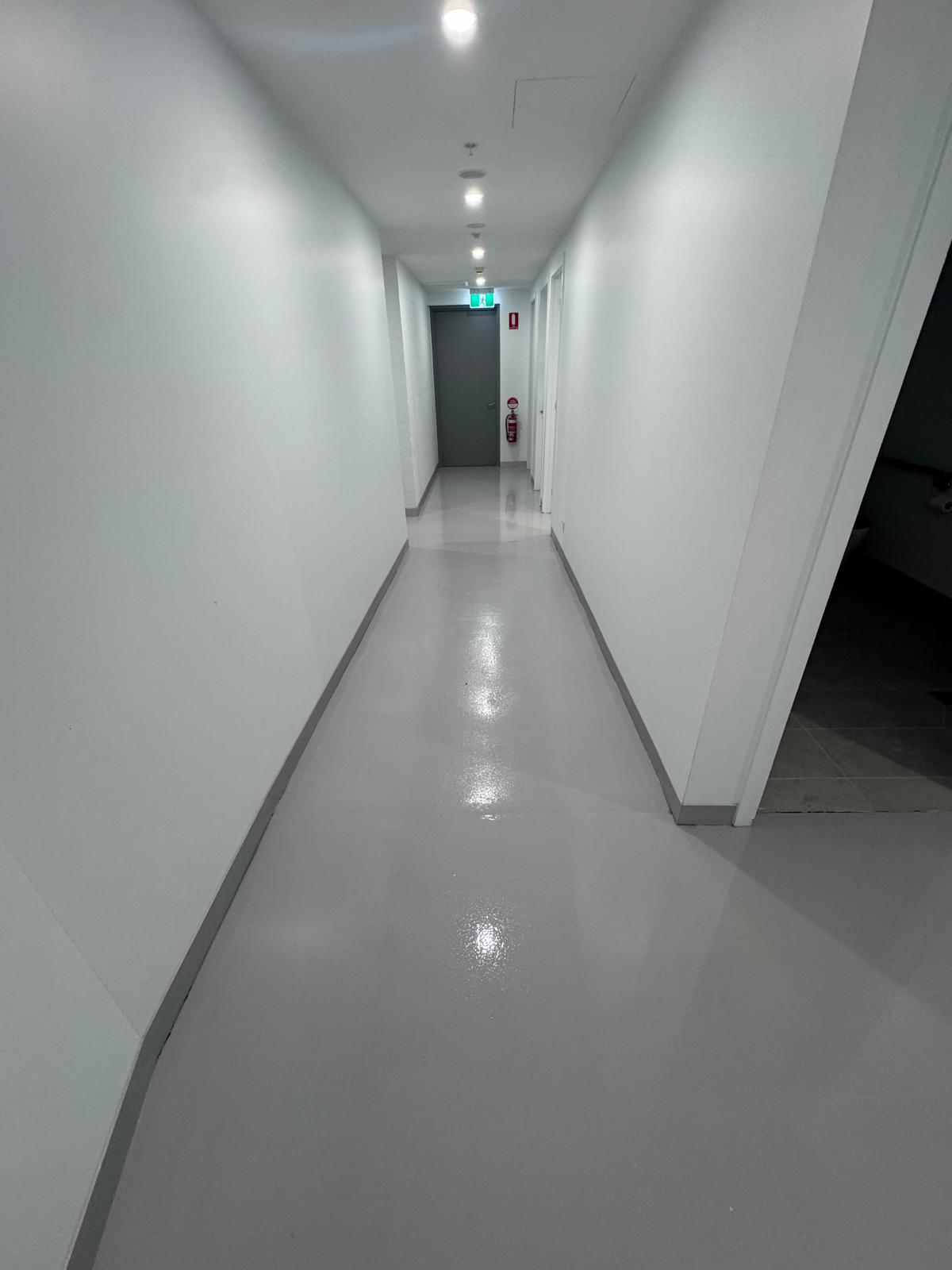
What’s Actually in an Epoxy System?
A quote for “epoxy” is really a quote for layers. A proper system usually looks like this:
- Grind. Diamond grinding removes the weak surface layer and opens up the concrete so the coating can grip.
- Repair. Cracks, chips and old joints get filled and levelled.
- Prime. A primer, or a moisture barrier where the slab needs one, locks the surface down.
- Base coat. The main epoxy layer that gives the floor its strength and colour.
- Decorative layer. Flakes, metallic pigment or grip aggregate, if the system calls for it.
- Topcoat. A UV-stable clear coat, often polyurethane or polyaspartic, that protects against scratches and sun.
Miss a step and you might still get a floor that looks fine on handover day. You just won’t get one that holds up.
Why Prep Matters More Than the Product
Epoxy is only as strong as whatever it’s stuck to. If it’s bonded to dust, oil, old paint or a weak concrete skin, it will peel away and take that weak layer with it.
That’s why grinding comes first. It’s also why a low quote often means a thin prep. Read why grinding comes first or see our concrete grinding service for how we prepare a slab.
Two other things get checked before any coating goes down:
- Moisture. Slabs can push moisture vapour up through the concrete. If that’s ignored, you get bubbles and blisters weeks or months later.
- Contamination. Old oil and grease soak into concrete. They need to be dealt with, or the coating won’t bond.
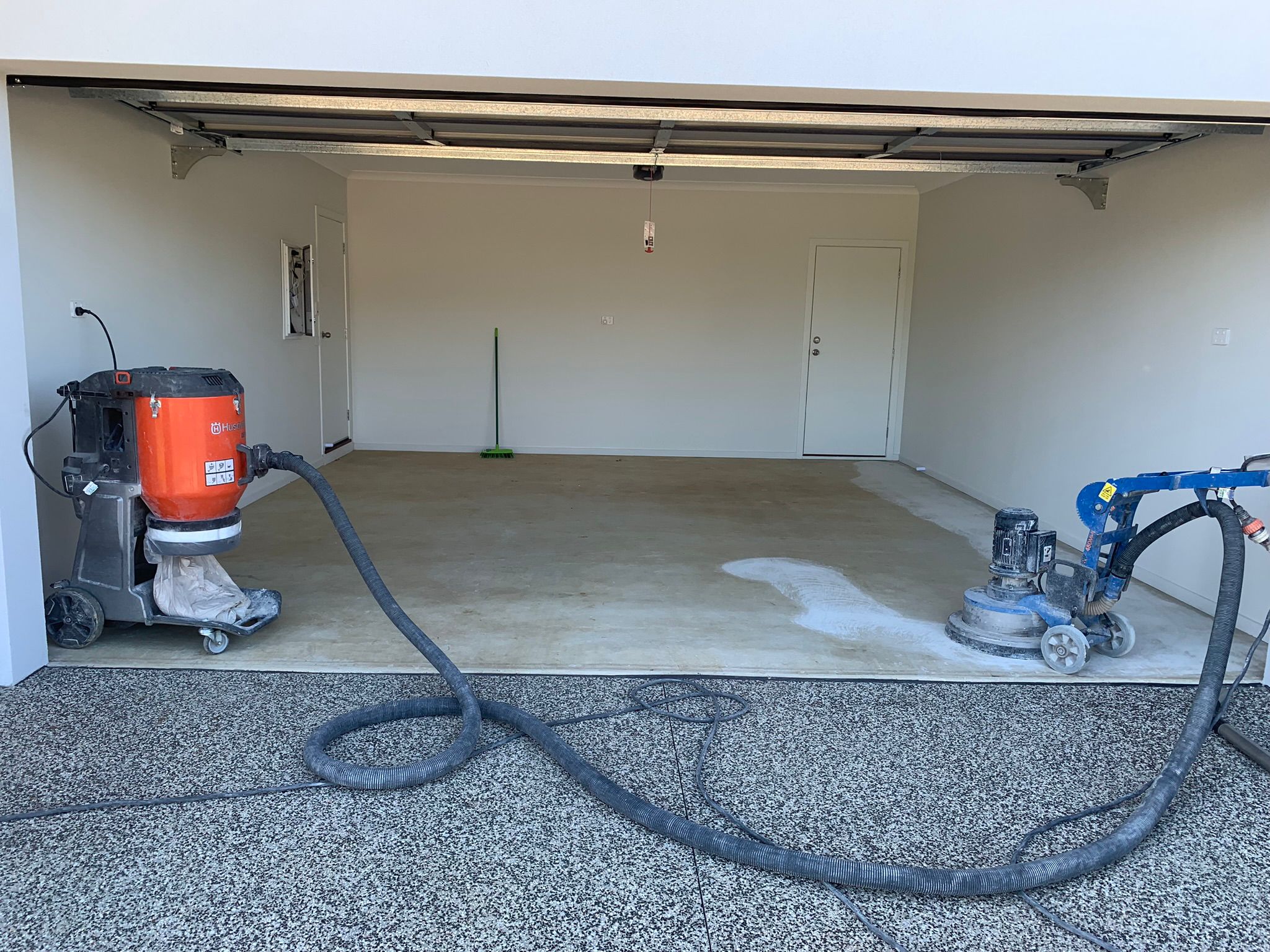
A driveway before and after coating.
Thickness and “100% Solids” Explained
You’ll see “100% solids” on professional product sheets. It means almost everything in the tin ends up as coating on the floor, rather than evaporating off as water or solvent.
Many hardware store kits are water-based and lower in solids. The film they leave is thinner and softer. Thin coatings feel fine on day one and show wear quickly in a garage that sees tyres, tools and hot summer afternoons.
How Long Does an Epoxy Coating Take to Install and Cure?
Most home garages are done in a couple of days. Larger or more complex floors take longer. Curing is a separate clock:
- Walking on it: usually the next day.
- Parking the car: most installers ask for several days, and some prefer up to a week, so the floor reaches full hardness.
Driving on it too early is how tyre marks and lifted patches happen. If someone tells you it’s ready in a few hours, ask more questions. For the full timeline, see how epoxy installation works, step by step.
Epoxy Coating in Geelong Conditions
Geelong isn’t a lab. A few local things affect how an epoxy floor performs.
- Sun. Garage doors, open carports and alfresco areas let UV in. Standard epoxy can yellow and chalk in direct sun, which is why a UV-stable topcoat matters.
- Cold, damp mornings. Temperature and humidity change how epoxy cures. Good installers plan around the weather rather than rushing a coat on.
- New builds. A brand-new slab needs time to cure before it’s coated, commonly around 28 days, and the moisture should be checked. This comes up a lot in growing suburbs like Waurn Ponds and Grovedale.
- Pools and outdoor areas. Slip resistance and UV protection do the heavy lifting. See epoxy around a pool.
When Epoxy Isn’t the Right Choice
A good installer will tell you when not to use it. Epoxy is usually the wrong call for:
- Constantly wet areas. Bathrooms and other wet zones need a specific system. Read what actually works in wet areas.
- Slabs with an active moisture problem. Fix the moisture first, or the coating will fail.
- Weak or flaking concrete. It needs repair or resurfacing before anything goes on top.
How to Look After an Epoxy Floor
It’s low effort. Sweep, and mop with a mild cleaner. Wipe spills when you see them. Avoid harsh solvents and abrasive scrubbers that dull the topcoat. Felt pads under heavy furniture and workshop gear help too.
What to Ask Before You Accept a Quote
Two quotes for “epoxy flooring” can be two completely different jobs. Ask:
- Is diamond grinding included, and over the whole floor?
- Will the slab be checked for moisture?
- How many coats, and what’s the topcoat made of?
- Is it UV-stable, if any sun hits the floor?
- What’s covered if it fails, and is that in writing?
More on this in our checklist for choosing an epoxy flooring company. And if you want the money side, see our epoxy flooring cost guide. As a starting point, professional epoxy in Australia typically runs from about $45 to $150 per square metre depending on the system.
Frequently Asked Questions
How long does an epoxy coating last?
With proper prep and a UV-stable topcoat, 10 years or more is realistic for a home garage, and often longer with light use. Heavy traffic, poor prep and direct sun all shorten that.
Can you put epoxy over old paint or an existing coating?
Usually the old layer has to come off first. If it’s peeling, tacky or poorly bonded, it will take the new coating with it. A grinder solves this.
Can you epoxy brand-new concrete?
Yes, but not straight away. The slab needs time to cure, commonly around 28 days, and moisture levels should be checked before coating.
Is an epoxy floor slippery?
A smooth gloss finish can be slippery when wet. Grip aggregate or a flake finish adds traction. Tell your installer where the floor will get wet.
Will epoxy yellow in the sun?
Standard epoxy can, with direct UV exposure. A UV-stable polyurethane or polyaspartic topcoat is what protects colour on sunny floors.
Is epoxy better than polished concrete?
They suit different jobs. Epoxy gives you colour, flake or metallic effects and stronger chemical resistance. Polished concrete keeps the natural concrete look. Our epoxy vs tiles vs polished concrete guide breaks it down.
Thinking About an Epoxy Coating in Geelong?
Geelong Concrete Coatings is locally owned and operated. We’ll look at your slab, explain what it needs, and give you a straight quote. See our epoxy flooring service for finishes and before and after photos, or get in touch below.
Ready to Transform Your Concrete?
Get a free, no-obligation quote for your epoxy coating project.
Your quote request has been received.
Our team will get back to you shortly.