
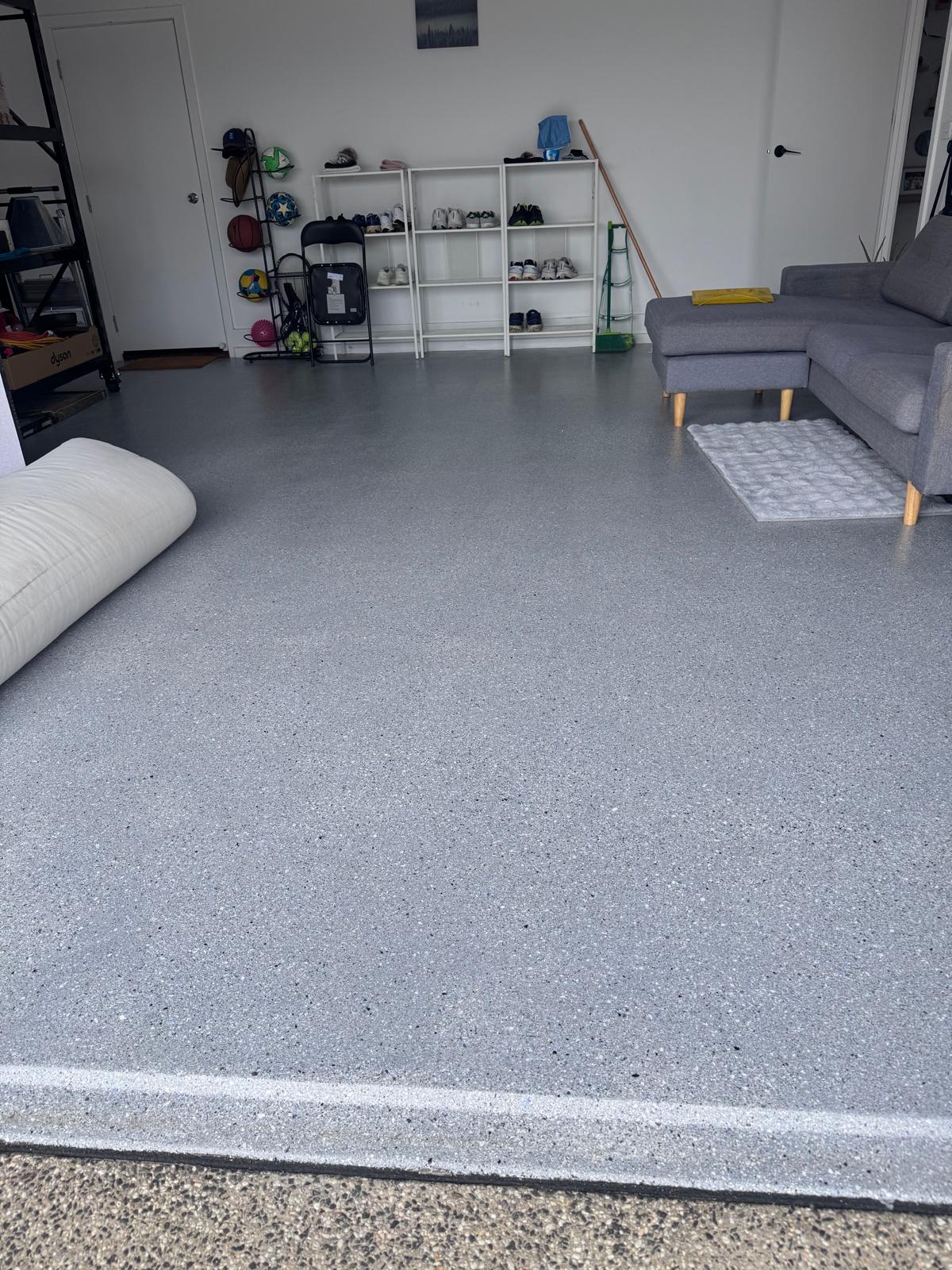
Quick answer: A properly installed epoxy floor needs very little. Sweep or dust mop regularly, mop with warm water and a pH-neutral cleaner, wipe spills early, and skip harsh acids and waxes. Do that and your floor should look good for years. Most problems we see in Geelong garages come from cleaning mistakes, not from the epoxy itself.
Here is the simple routine we give every customer after an install.
Why epoxy is easy to look after (when it is done right)
Epoxy forms a sealed, seamless surface over your concrete. Dirt, oil and moisture sit on top instead of soaking in. That is why a quick mop does the job where bare concrete would need a degreaser and a lot of scrubbing.
The catch is the prep. If the slab was not ground and cleaned properly before coating, no cleaning routine will save it. If you are not sure how yours was prepared, read why concrete grinding comes first and how it affects bond.
Your weekly routine (10 minutes)
- Sweep or dust mop. Grit is the real enemy. It acts like fine sandpaper under tyres and shoes, and it dulls the gloss over time.
- Mop with warm water. Use a soft mop or microfibre pad. Add a pH-neutral floor cleaner if the floor feels greasy.
- Dry it off. Especially on a smooth gloss finish, standing water can leave marks and makes the surface slippery.
Dealing with spills, oil and tyre marks
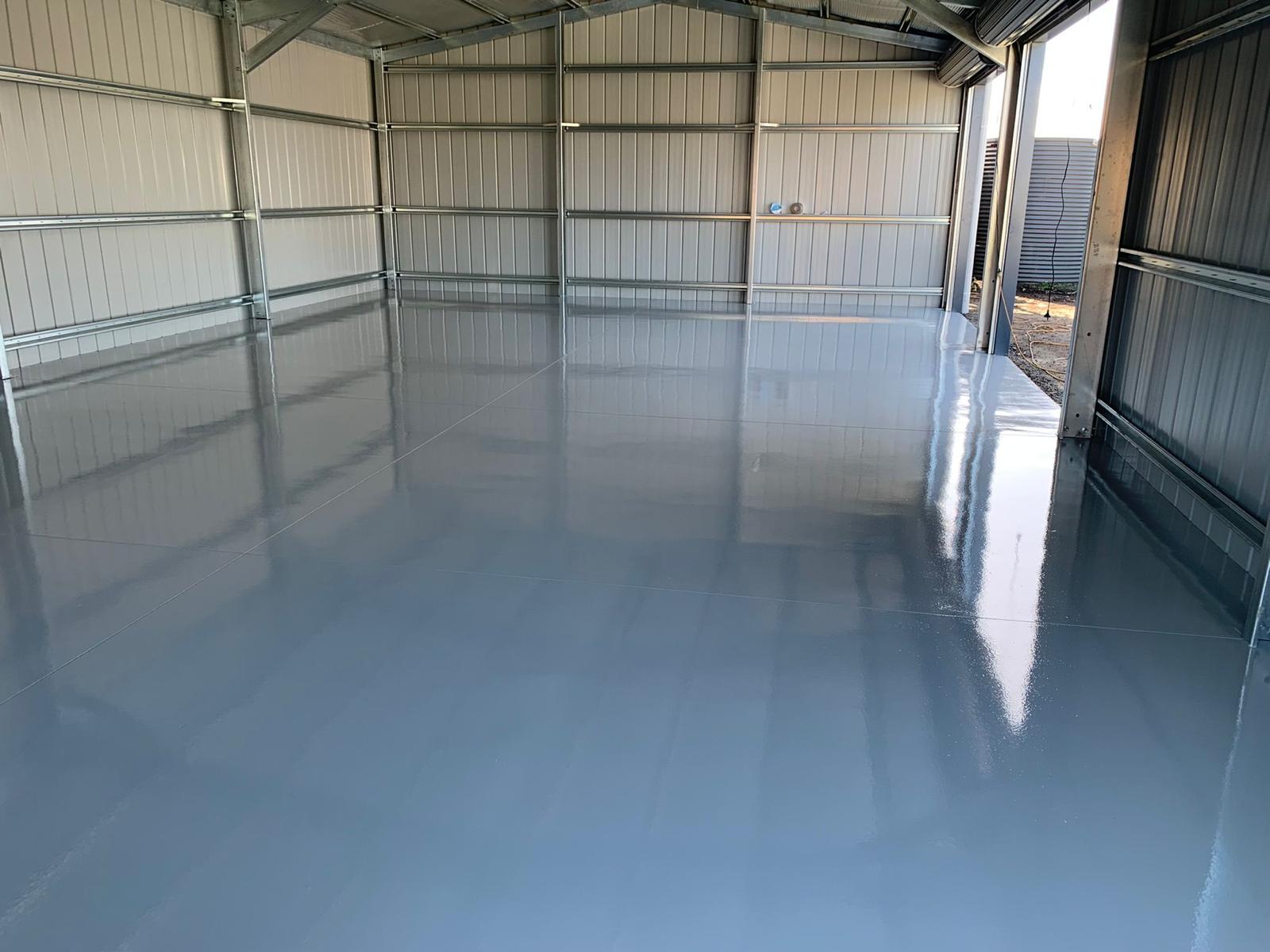
Wipe up spills as soon as you can. Oil, brake fluid, petrol and battery acid are all things a garage floor meets sooner or later. Epoxy resists most of them, but leaving them for weeks is asking for staining.
For stubborn marks, use a soft nylon brush with warm soapy water. Do not reach for a wire brush or a strong solvent. Some hot tyre marks and rubber transfer can also show up on lighter colours. A gentle scrub usually lifts them.
What to avoid
- Acidic cleaners. Vinegar, citrus products and strong acid-based cleaners can dull or etch the surface.
- Wax and polish. They build up a film, look patchy and can make the floor slippery.
- Steel scrapers and stiff wire brushes. They scratch the topcoat.
- Dragging heavy items. Lift workbenches, toolboxes and gym gear. Use rubber feet or felt pads where things have to sit.
- Harsh pressure washing. A gentle rinse is fine. Close-range, high-pressure blasting is not.
Keeping the shine in a Geelong garage
Garages with big west-facing doors get plenty of afternoon sun. Some epoxy systems can yellow or lose a bit of gloss with long UV exposure, so ask your installer about UV-stable topcoats when you get a quote. Doormats at the entry points also catch a lot of grit before it hits the floor.
If you chose a decorative finish, the care is the same. Our flake flooring is a good example. The flakes hide everyday marks, so the routine above is usually all it takes. If you are still deciding on a finish, see how flake, plain epoxy and polished concrete compare.
Commercial floors: a bit more often
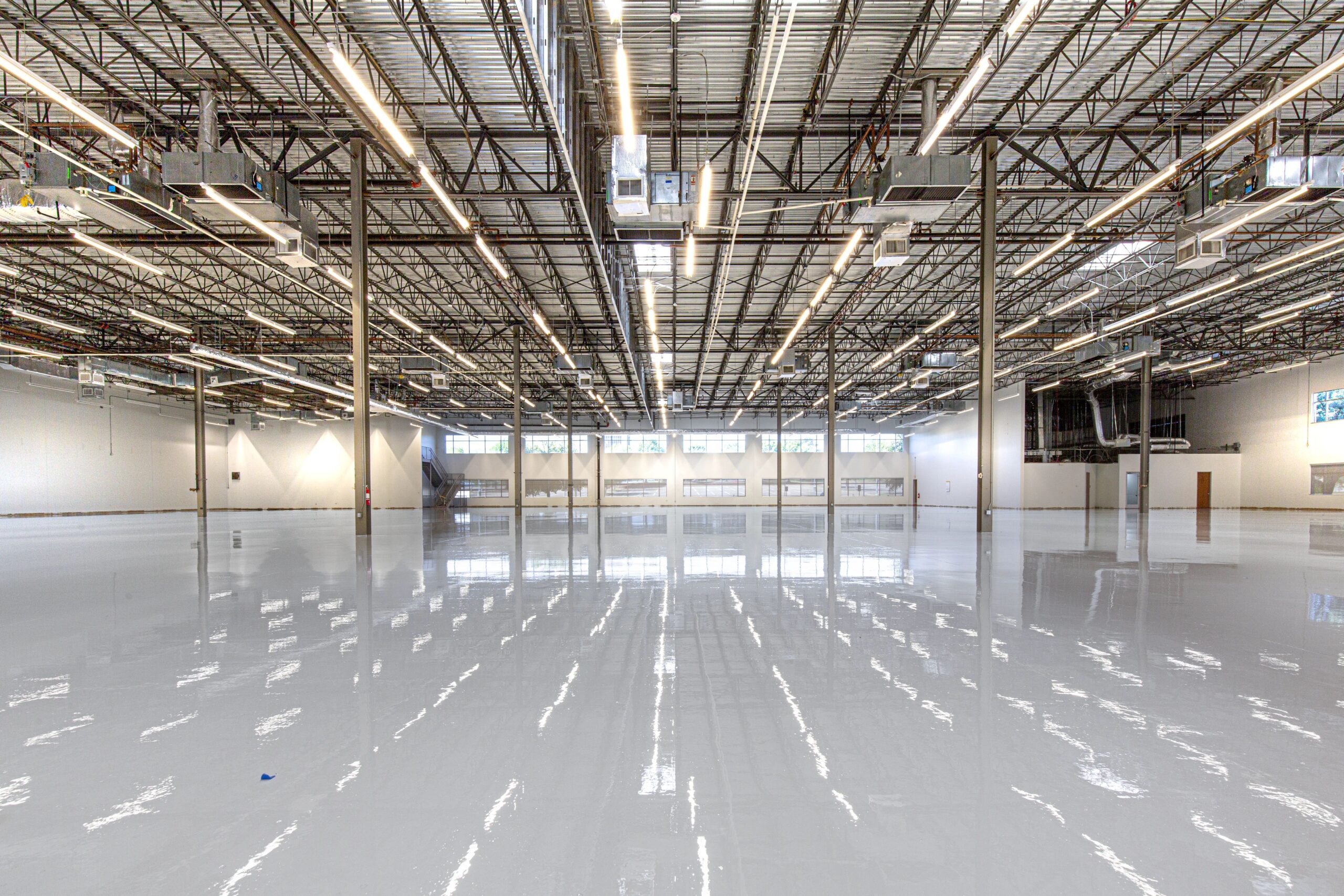
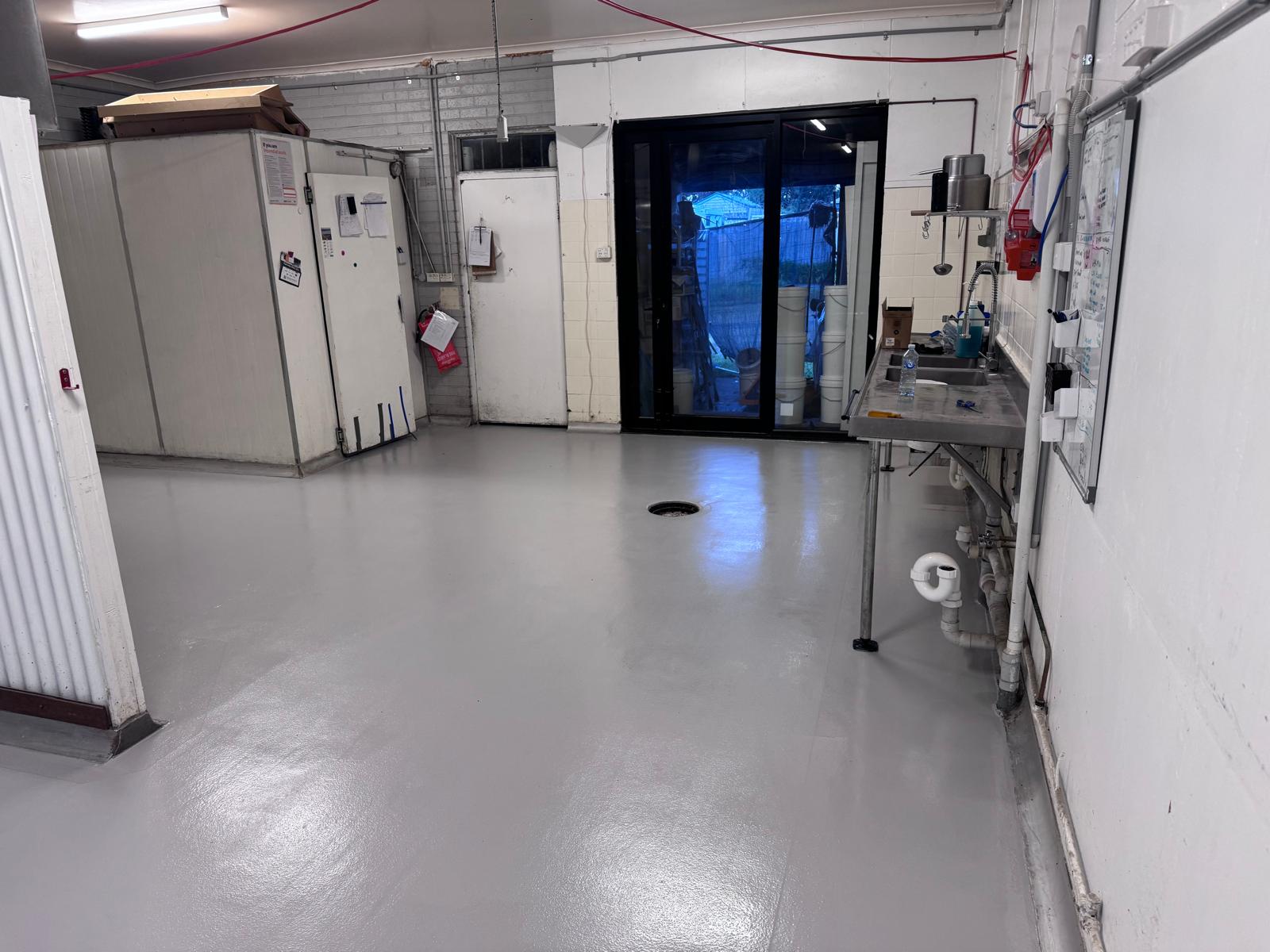
Workshops, warehouses and kitchens see more traffic and more spills. Sweep daily, mop at the end of each shift, and use a mild degreaser where oils are involved. Food areas also need a floor that stays safe when wet. Our guide to anti-slip epoxy for commercial kitchens covers that in detail.
When cleaning will not fix it
If you see peeling, bubbling, or lifting at the edges, cleaning is not the answer. That usually points to moisture, poor prep or a failed bond. Our guide on epoxy floor peeling, bubbling or cracking explains the causes and what repair looks like.
And if you are wondering how long the floor itself should last with good care, read how long concrete coatings last.
Frequently asked questions
Can I use a steam mop on epoxy?
We would not. Heat and moisture can stress the coating. Warm water and a soft mop is safer and works just as well.
How often should I clean my garage epoxy floor?
A quick sweep weekly and a mop every couple of weeks is plenty for most homes. Clean up spills as they happen.
Does epoxy need resealing?
A quality epoxy system with a proper topcoat does not need regular resealing. High-traffic commercial floors may need a topcoat refresh after several years. Ask us what suits your space.
What does it cost to get a floor done in the first place?
It depends on size, condition and finish. Our epoxy flooring cost guide has typical Geelong price ranges, and the installation process guide shows what to expect on the day.
Thinking about an epoxy floor?
See our full epoxy flooring Geelong page for finishes and past jobs, or call Joe on 0433 249 998 for a free, no-obligation quote. You can also send your details below and we will get back to you.
Your quote request has been received.
Our team will get back to you shortly.