

Quick answer: A concrete coating is a protective layer applied over concrete to make it tougher, easier to clean and better looking. In Geelong the main options are epoxy, decorative flake, metallic epoxy, polyaspartic or polyurethane topcoats, and sealers. The right one depends on where the floor is, what it carries and how much sun it gets. The coating matters. The prep underneath matters more.
Two garages. Same size, same builder, same year.
One floor is still smooth and glossy a decade later. The other started peeling at the roller door by the second summer.
Same concrete. Different story.
The difference is almost never the brand on the tin. It is whether the right system went onto a properly prepared slab. So let’s walk through the options, what each one is good at, and how to pick.
What is a concrete coating?
Plain concrete is strong, but it is also porous. It soaks up oil, dusts over time, stains easily and wears under tyres. A coating sits on top and shields it.
Done well, it gives you a floor or surface that is easier to clean, tougher on traffic and a lot nicer to look at. Done badly, it peels. Which is why the rest of this guide spends so much time on prep.
The main types of concrete coatings in Geelong
Epoxy coatings
The workhorse. Epoxy bonds hard to a ground slab and gives a seamless, glossy, easy-clean surface. It suits garages, workshops, shops and warehouses. Our epoxy flooring service covers the full range, and the guide to epoxy types, thickness and lifespan goes deeper.
Decorative flake systems
Epoxy with coloured flakes broadcast through it. It hides marks, adds grip and gives a garage a proper finished look. If you are torn between this and a plain finish, read flake vs plain epoxy vs polished concrete. Or see our flake flooring page.
Metallic epoxy
Metallic pigments swirled through clear resin for a marbled, almost liquid look. It is a feature floor for showrooms, living areas and high-end garages. Here is what to know before choosing metallic epoxy.
Polyaspartic and polyurethane topcoats
These are the UV-stable options. Standard epoxy can yellow in direct sun, so outdoor slabs and sun-exposed areas often get a polyaspartic or polyurethane finish instead, or as a topcoat over epoxy. They also cure quickly, which can shorten downtime.
Sealers
A sealer is a thinner protective layer. It helps with dusting, moisture and stains, and it needs reapplying over time. For industrial floors, a coating is often the better long-term call. We cover the difference in concrete sealing for warehouse and factory floors.
Polished concrete (not a coating, but often compared)
Polishing grinds and densifies the slab itself instead of covering it. It only works on a solid, flat, dry slab. If yours is patchy or cracked, a coating is usually the better route. See polishing vs coating before you decide.
Quick comparison
| Type | Best for | Watch out for |
|---|---|---|
| Epoxy | Garages, workshops, warehouses, shops | Can yellow in strong sun outdoors |
| Flake system | Home garages, entertainment areas | Needs the right topcoat for wear |
| Metallic epoxy | Showrooms, feature floors, living spaces | Skilled install matters a lot |
| Polyaspartic / polyurethane | Outdoor and sun-exposed slabs | Fast cure leaves less working time |
| Sealer | Light protection, dust and moisture control | Reapplication over time |
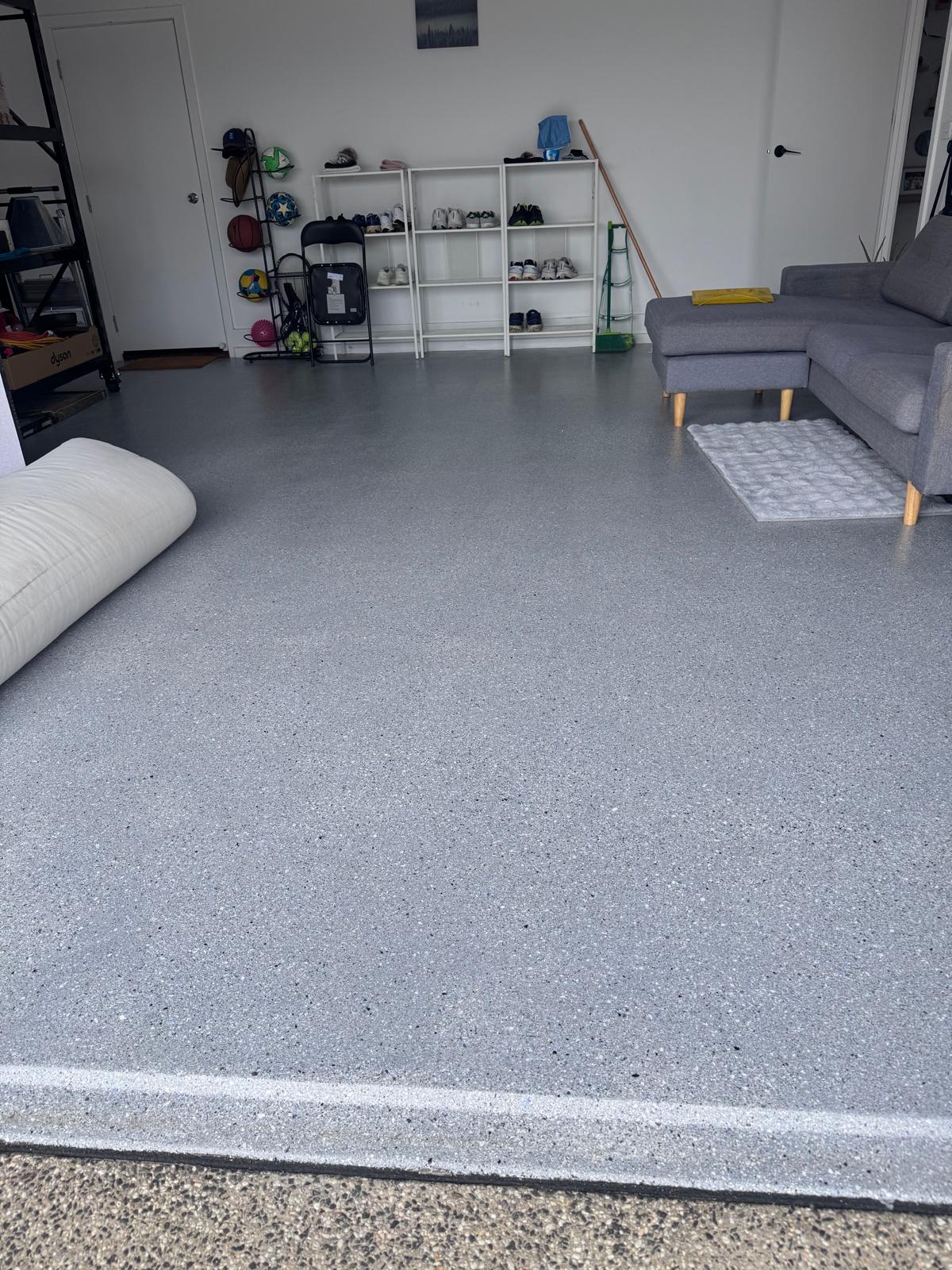
Which coating suits which space?
Garages
Flake or plain epoxy is the usual pick. Hot tyres, oil drips and dusty slabs are what these systems are built for. Start with our garage floor coating tips.
Driveways and outdoor concrete
Sun, rain and tyres all hit at once, so UV stability and grip matter. Clean the slab first (our pressure washing does the job), then look at driveway restoration. Cracks need dealing with before anything goes on, and this cracks guide explains how. For budget, see driveway resurfacing costs.
Warehouses, factories and commercial floors
Forklifts, chemicals and constant traffic call for a heavy-duty system. Read commercial and warehouse epoxy flooring, plus our notes on asset protection coatings and line marking.
Wet areas, pools and kitchens
Slip resistance and moisture are the whole game here. Standard coatings are not built for constant water, so choose carefully. See bathrooms and wet areas, pool surrounds and commercial kitchens.
Prep is where coatings are won or lost
A coating only bonds as well as the surface under it. That is why every proper job starts with concrete grinding in Geelong. Diamond grinding removes the weak top layer, old paint and glue, and opens the slab so the coating can grip.
Skip it and you are gambling. We explain the reasoning in why grinding comes first, and you can sense-check a quote with the concrete grinding cost guide.
Two common questions before you start:
- Got old paint, tiles or a tired coating? Here is what can and cannot be coated over.
- Brand new slab? Wait times for new concrete matter more than most people expect.
How much do concrete coatings cost?
It depends on four things: the size of the floor, the condition of the slab, the system you choose and how much prep it needs. A clean, sound slab costs less to coat than one with cracks, old glue or levelling problems.
For real numbers, start with the epoxy flooring cost per square metre guide. The honest answer for your floor comes from a quick look at photos or a site visit.
How long do concrete coatings last?
A professionally installed system typically lasts 10 to 25 years, depending on the product, the traffic and the sun. Our full lifespan guide breaks it down by space. And if a floor is already letting go, see why epoxy floors peel and bubble.
DIY kit or professional install?
Hardware store kits use thinner resins and skip the grinding step. That is where most DIY floors go wrong. We spell out what actually goes wrong with DIY kits. If you hire out, use this checklist for choosing a flooring company.
Where we work
We cover Geelong and the surrounding region. See the inner suburb guide, the Torquay to Lara regional guide, and our notes for Waurn Ponds and Grovedale.
Frequently asked questions
What is the best concrete coating for a garage?
For most homes it is a flake or plain epoxy system over a properly ground slab. It handles tyres, oil and daily use, and it cleans up easily.
Do I need to grind concrete before coating it?
Yes, in almost every case. Grinding removes the weak surface and gives the coating something to grip. Skipping it is the most common reason coatings fail early.
Can I coat an outdoor driveway?
Yes, but outdoor slabs need UV-stable, slip-resistant systems and any cracks repaired first. Standard indoor epoxy is not the right choice in direct sun.
What is the difference between a coating and a sealer?
A coating forms a thicker, harder-wearing layer. A sealer is thinner and protects against dust, moisture and stains, but it needs reapplying more often.
How long does a concrete coating take to install?
Many garage jobs take a few days including prep and cure time. Larger or more complex floors take longer. We will give you a clear timeline when we quote.
Is a coating better than polished concrete?
Neither is better in every case. Polishing suits sound, flat, dry slabs. Coatings suit floors that need more protection, colour or repair work.
Not sure which coating your floor needs?
Send us a few photos and the rough size. We will tell you what the floor needs, what we would put on it and what it will cost. No pressure.
Call Joe on 0433 249 998 or request a quote below.
Your quote request has been received.
Our team will get back to you shortly.